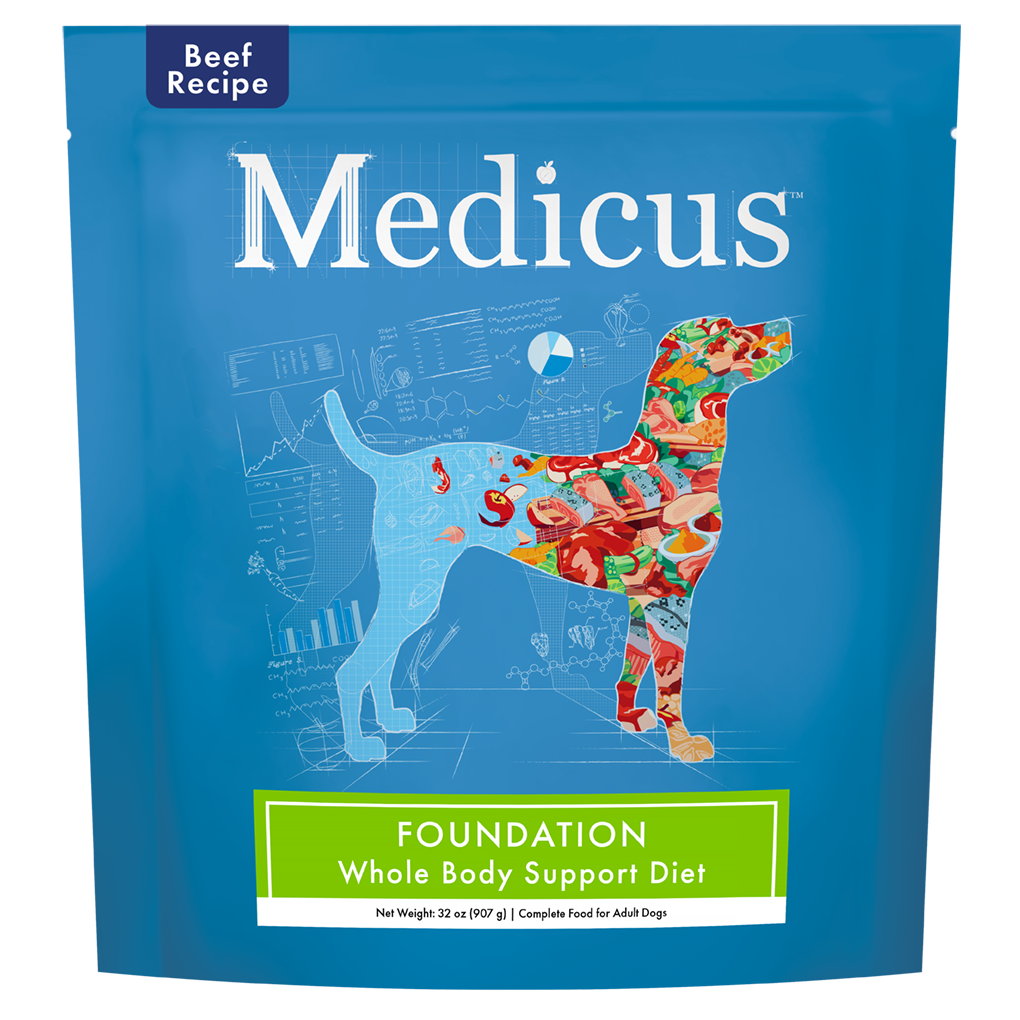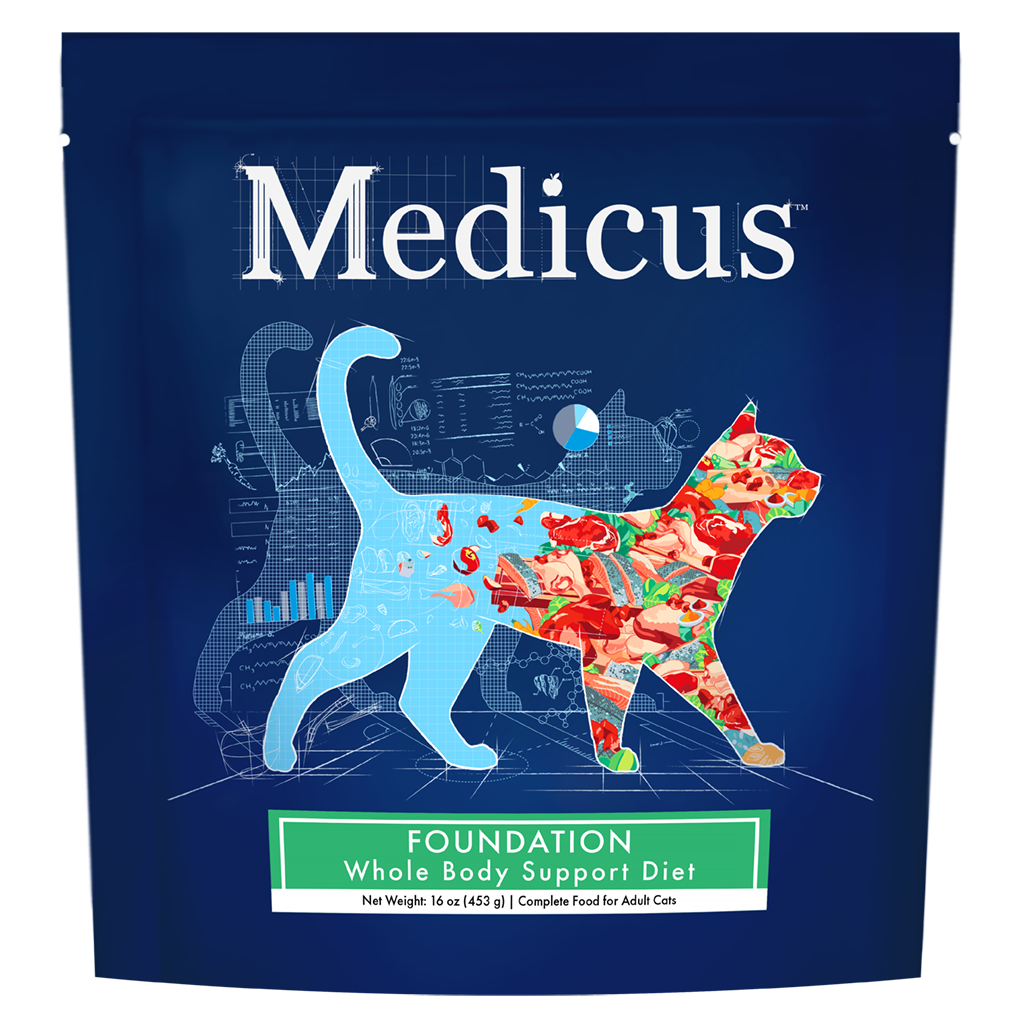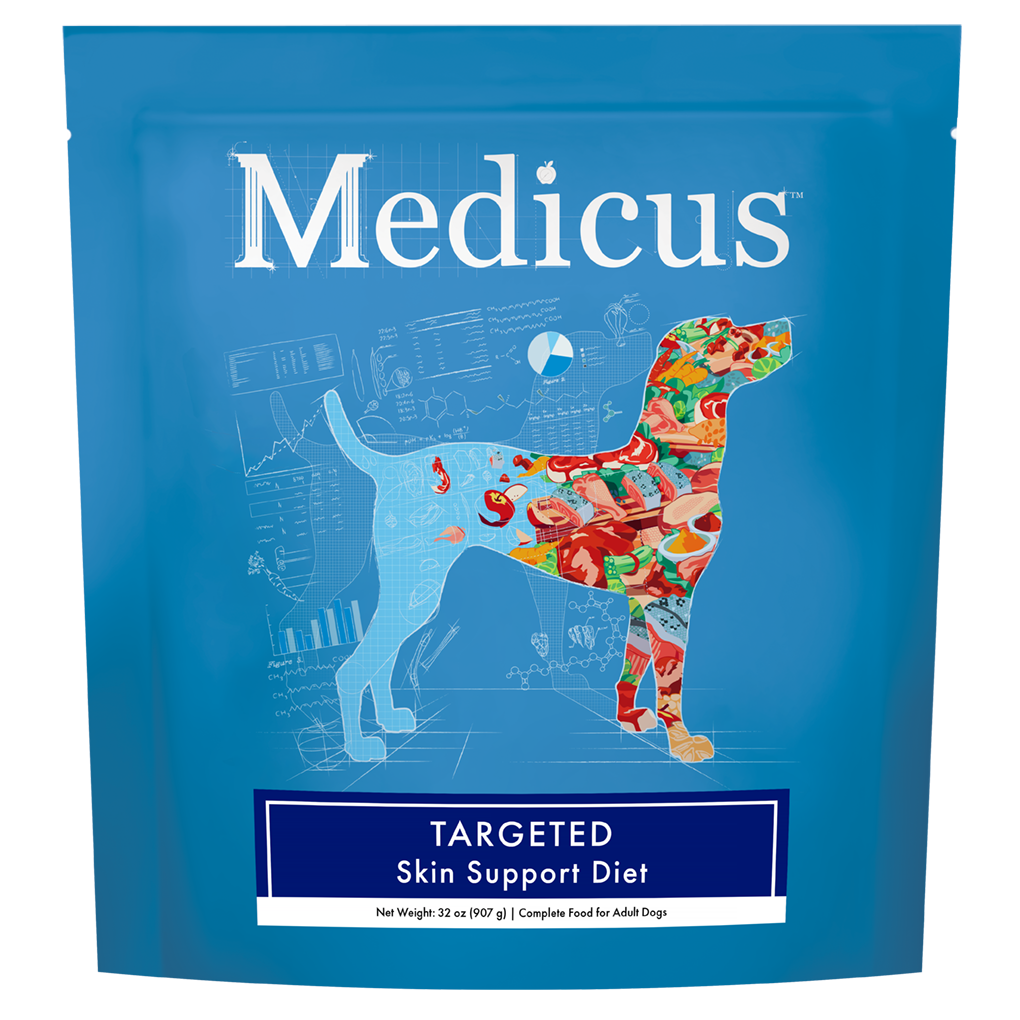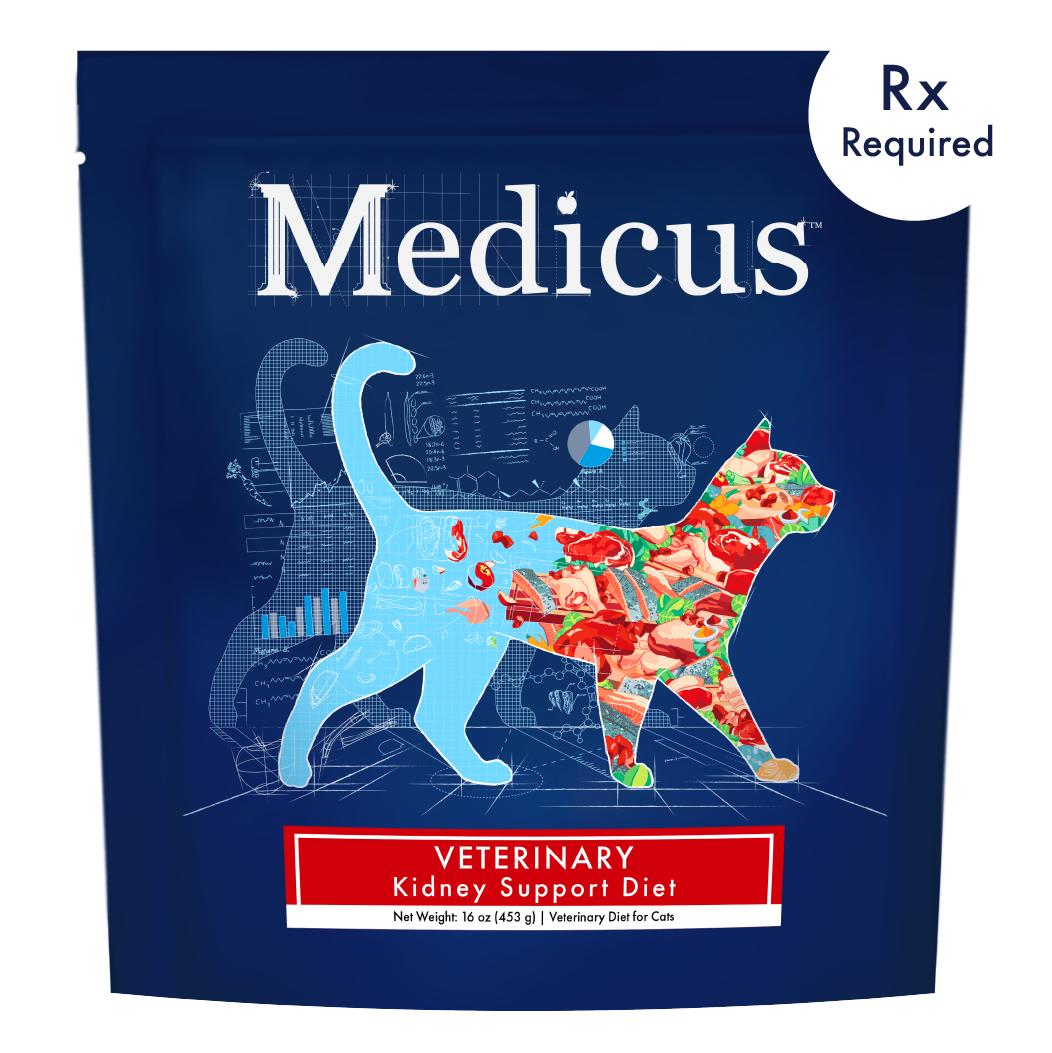
Designed for the Most Common Nutritional Challenges Pets Face Today

Diet is one of the most meaningful choices we make for our pets—day after day, bowl after bowl, over a lifetime. And when a pet’s needs become more complex, nutrition matters even more—not as a quick fix, but as a steady, intentional foundation that supports the body as a whole.
Medicus was created to rethink what clinical nutrition could be. Years in the making, veterinarians and nutritionists worked side by side to design a new standard of nutritional support—one that combines whole foods, precise formulation, and freeze-drying to serve pets who need more than everyday nutrition.
Real nutrition starts with real ingredients. Medicus recipes are built with whole foods—like grass-fed meats, responsibly sourced fish, and thoughtfully selected produce—chosen for their nutritional value, not convenience.
Each formula is intentionally designed, using nutritional modeling and research-backed principles to support specific nutritional requirements. Every ingredient has a role, and every recipe is built with precision.
Medicus diets are developed by veterinarians and reviewed by independent nutrition experts to ensure nutritional integrity, consistency, and purpose, especially for pets with more complex dietary needs.
Freeze-drying allows us to preserve whole foods while delivering safe, shelf-stable nutrition. By removing moisture at low temperatures, this process helps maintain naturally occurring nutrients and minimizes heavy processing, resulting in diets that stay closer to fresh food in form and function.


Fresh, whole-food ingredients are easier for pets to digest and deliver nutrients in a form their bodies can actually use: something backed by real research in dogs and cats.
Every Medicus recipe is built to support healthy digestion and immune function, starting with ingredients that work with the body, not against it.
Medicus formulations are grounded in modern science utilizing two frames of thought– an intimate understanding of food’s most basic architecture and the knowledge of how the disease impacts the body.
Limiting a specific component of a diet like phosphorus for the kidney patient, or choosing a specific ingredient for its form and function, can nurture the body’s innate ability to heal.
The latest data points to a growing challenge for our pets. More than half of dogs and cats are now classified as overweight or obese, and veterinarians are seeing a steady rise in digestive and metabolic issues across all life stages. Cancer remains one of the leading causes of death in dogs, particularly as they age, with risk increasing over time.
At the same time, there is a growing body of scientific research showing that fresh, whole-food diets can play an important role in supporting overall health. Whole foods tend to be more bioavailable and easier to digest, helping support the gut, immune system, and microbiome—key systems that influence long-term resilience and quality of life.
A Few Fresh Food Studies
Raghavan M, Knapp DW, Bonney PL, Dawson MH, Glickman LT. Evaluation of the effect of dietary vegetable consumption on reducing risk of transitional cell carcinoma of the urinary bladder in Scottish Terriers. J Am Vet Med Assoc. 2005 Jul 1;227(1):94-100. doi: 10.2460/javma.2005.227.94. PMID: 16013542.
Buff PR, Carter RA, Bauer JE, Kersey JH. Natural pet food: a review of natural diets and their impact on canine and feline physiology. J Anim Sci. 2014 Sep;92(9):3781-91. doi: 10.2527/jas.2014-7789. Epub 2014 Jul 8. PMID: 25006071.
Oba PM, Utterback PL, Parsons CM, Swanson KS. True nutrient and amino acid digestibility of dog foods made with human-grade ingredients using the precision-fed cecectomized rooster assay. Transl Anim Sci. 2019 Dec 6;4(1):442-451. doi: 10.1093/tas/txz175. PMID: 32705002; PMCID: PMC6994059.
Do S, Phungviwatnikul T, de Godoy MRC, Swanson KS. Nutrient digestibility and fecal characteristics, microbiota, and metabolites in dogs fed human-grade foods. J Anim Sci. 2021 Feb 1;99(2):skab028. doi: 10.1093/jas/skab028. PMID: 33511410; PMCID: PMC8611730.
And studies are pointing to the dangers of commercial pet food processes that create dry kibble diets.
John H. Tegzes, Brian B. Oakley & Greg Brennan (2019) Comparison of mycotoxin concentrations in grain versus grain-free dry and wet commercial dog foods, Toxicology Communications, 3:1, 61-66, DOI: 10.1080/24734306.2019.1648636
Jiang Zhao, Steven Pacenka, Jing Wu, Brian K. Richards, Tammo Steenhuis, Kenneth Simpson, Anthony G. Hay, Detection of glyphosate residues in companion animal feeds,
Environmental Pollution, Volume 243, Part B, 2018, Pages 1113-1118, ISSN 0269-7491, https://doi.org/10.1016/j.envpol.2018.08.100.
Diet is the most important choice we can make about your pet’s health, and fresh, whole foods provide the nutritional framework to nourish our pets.
We source our ingredients from trusted food suppliers who prioritize quality, safety, and transparency—the same suppliers that serve the food industry.
All of our ingredients are food-quality, including grass-fed meats, responsibly sourced fish, and organically grown produce. Each ingredient is selected for its nutritional value and handled with care from sourcing through production.
The food is made and manufactured in Wisconsin in a cGMP facility using the highest Quality Control and Food Safety standards.
Dr. Chris Bessent owns Medicus along with the facilities in Wisconsin where the food is made.
As the owner and operator of the manufacturing facilities, Dr. Bessent is able to provide strict oversight and accountability for every step in the process. Every ingredient, each production phase, and the completed batch of food is logged for complete traceability.
It’s quality you can trust from a veterinarian with over 30 years of experience.
Freeze-drying is a process of removing water through sublimation. The 16 -18 hour process removes moisture from frozen ingredients utilizing vacuum and extreme cold. Temperatures drop below freezing, and the evacuated chamber converts water molecules from frozen to vapor, skipping the liquid phase. As a result, the ingredients go from frozen to dry without ever being thawed or cooked.
It’s a process pioneering how we feed our pets and undeniably the best way to offer food as close to fresh, whole food as possible. It makes ingredients like clean, quality meats and produce shelf-stable and safe while preserving all of the nutrition for your pet.
We understand concerns about avian influenza H5N1and the safety of pet foods.
All Medicus recipes undergo a pasteurization step at the end of the freeze-drying process. This step involves heating ultradry meat or organs to 165°F for at least 15 seconds, achieving a 5-6 log reduction of pathogens like salmonella, E. coli, and kills viruses such as avian influenza H5N1.
Is Pasteurization Effective?
Yes. The pasteurization process is considered sufficient to inactivate any virus in the meat, including highly pathogenic avian influenza H5N1 ensuring the safety of our products.
Do You Conduct Safety Testing?
Absolutely. We use third-party testing to validate the effectiveness of our pasteurization process and verify that every batch meets rigorous safety standards.
Should I Be Concerned About Feeding Freeze-Dried Products?
Not ours. Our freeze-drying and pasteurization protocols ensure that our products are safe, nutritious, and free from harmful pathogens.
And What About Sourcing?
We source all our meats from USDA-approved and inspected plants. Each supplier attests that all raw meat purchased for The Simple Food Project and Medicus Veterinary Diets is verified free from HPAI H5N1 and sourced from healthy herds or flocks. This verification is a key requirement in our Approved Vendor selection process, ensuring the highest quality and safety standards.
Sign up and get content to help you make more informed decisions about your pet’s care.